Best Men's Underwear for Hot Weather: What to Look for in Summer 2026
Heat, sweat, and discomfort don't have to be inevitable. The right summer underwear can transform how you feel from morning to night — here's exactly what to look for.
Why Summer Underwear Deserves More Attention Than You're Giving It
Most men treat underwear as an afterthought — until summer arrives and the combination of heat, sweat, and friction turns an average day into an exercise in discomfort. By mid-afternoon: damp fabric sticking to your skin, an irresistible urge to readjust, and the particular misery of thigh-on-thigh chafing that only gets worse as the day heats up.
None of this is inevitable. The right summer underwear — one built around heat management rather than just basic coverage — eliminates these problems at the source. Here's exactly what to look for.
---
Why Heat and Sweat Create a Cascade of Problems
To understand what makes summer underwear good or bad, it helps to understand the cascade of problems that poor underwear creates:
- Heat buildup begins: The intimate area naturally runs 2–4°C warmer than general body temperature. Fabric that doesn't breathe amplifies this.
- Sweating increases: The body responds to heat buildup with increased perspiration in the area.
- Moisture accumulates: Fabrics that absorb rather than wick moisture trap dampness against the skin.
- Friction increases: Damp skin plus fabric movement equals chafing — especially at the thigh crease and inner thigh.
- Odor develops: Warm, moist environments are ideal for the bacteria that produce odor. By afternoon, even clean underwear can smell if the fabric holds moisture.
- Constant readjustment: Bunched fabric, riding-up legs, and general discomfort create the persistent need to readjust — a problem that compounds in professional settings.
The solution is underwear that interrupts this cascade at step 1: by preventing heat and moisture buildup before they become a problem.
---
Key Criterion #1: Fabric
The most important single decision in summer underwear is fabric. Here's how the main options compare:
Cotton
Classic, familiar, and the worst possible choice for hot weather. Cotton absorbs moisture readily — up to 27 times its weight in water — but releases it slowly. By late morning on a warm day, cotton underwear has absorbed enough perspiration to feel noticeably damp. That moisture doesn't just feel uncomfortable; it increases friction and heat retention.
Synthetic fibers (polyester, nylon)
Better at wicking than cotton, but with a critical flaw: synthetic fibers trap heat and are excellent breeding grounds for odor-causing bacteria. "Performance" polyester underwear works well for short athletic bursts but struggles over a full day. By hour 6 in a hot environment, the odor problem with synthetic fabric is significant.
Micromodal
The best fabric choice for hot weather. Micromodal is a refined, ultra-fine cellulosic fiber that wicks moisture away from the skin significantly faster than cotton and releases it faster than synthetics. Critically, micromodal is naturally odor-resistant — its smooth fiber structure doesn't give bacteria the textured surface they need to colonize. It also feels noticeably cooler against the skin than cotton or synthetic alternatives.
---
Key Criterion #2: Airflow Architecture
Fabric is necessary but not sufficient. The *construction* of the underwear determines whether any airflow actually reaches where it matters.
Flat-panel construction — the default for most underwear — holds the entire intimate area in direct contact with the thigh and leg. There's no air gap, no circulation, just compressed fabric between two warm surfaces.
What to look for instead:
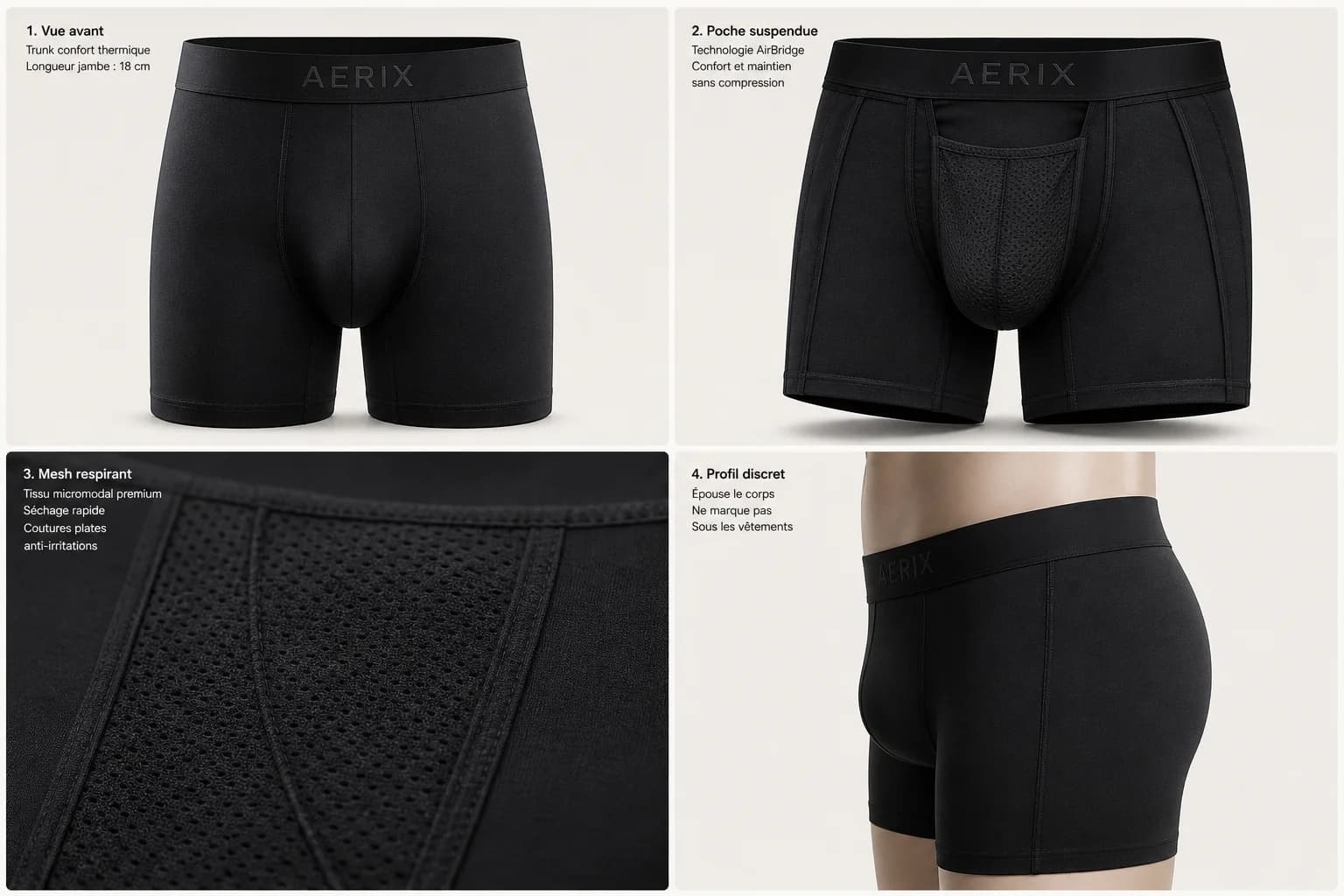
- Suspended mesh pouch/sling: A pouch that's supported from above rather than resting on a flat base creates a literal air gap between the intimate area and the thigh. This gap allows passive convective airflow — ambient air circulates rather than stagnating against your skin.
- Mesh panels: Technical mesh fabric (used in sports performance gear) allows airflow through the weave in a way that solid fabric cannot. Look for underwear that incorporates mesh in the pouch or gusset areas specifically.
- Diamond gusset: A gusseted crotch panel — especially in a diamond shape — reduces seam stress and creates additional surface area for airflow and moisture evaporation.
---
Key Criterion #3: Leg Length and Cut
Short boxer briefs (2–3 inch inseam) offer minimal coverage of the thigh — which means the fabric doesn't help prevent the inner-thigh contact that causes chafing. Longer boxer briefs (3.5–5 inch inseam) create a fabric barrier between your thighs throughout their full range of motion.
In hot weather, a slightly longer cut might seem counterintuitive (more fabric = more heat?). But if that fabric is lightweight micromodal rather than thick cotton, the chafe-prevention benefit far outweighs the minimal additional coverage.
---
Key Criterion #4: Waistband Design
Cheap waistbands fail in two ways in summer:
- Rolling and folding: A waistband that rolls down or folds under pressure creates a ridge that digs into the skin and interrupts circulation. This is more noticeable when you're warm because your skin is more sensitive to pressure.
- Over-tightness: A waistband that's too constrictive restricts blood flow and adds a line of pressure exactly where your body generates the most heat.
Look for: wide, anti-roll waistbands with a no-dig construction. The waistband should stay flat and in position all day without requiring readjustment, and shouldn't leave a mark at the end of the day.
---
Key Criterion #5: Seams
In hot weather, any seam that isn't flat becomes a potential friction point. Look for flatlock seams — a construction technique that stitches seams flat against the fabric rather than leaving a raised ridge. Flatlock seams are common in performance athletic wear precisely because they eliminate this problem.
Raised seams in the crotch or leg opening area are especially problematic in summer: damp skin is more sensitive to friction, and any irregularity in the fabric surface becomes more noticeable.
---
The Most Common Summer Underwear Mistakes
1. Wearing thick cotton because it "feels soft" Softness dry doesn't equal comfort when damp. Cotton underwear that feels comfortable in the drawer becomes clingy and rough within hours in summer heat.
2. Choosing the wrong cut Standard briefs compress the intimate area with no air gap and provide no thigh protection. Boxer briefs provide both — but only if the leg length is adequate and the pouch construction creates breathing room.
3. Using a too-tight waistband Men often buy underwear based on pants size, which doesn't account for the waistband restriction at the widest part of the hip. A too-tight waistband increases heat retention and becomes progressively more uncomfortable as the day heats up.
4. Ignoring odor management Changing underwear mid-day isn't always practical. Fabric that resists odor buildup — like micromodal — extends the window of fresh comfort significantly compared to synthetic fabric.
---
The AERIX Solution: Built for Heat
AERIX was designed specifically around the thermal comfort problem. Every element of the construction addresses a specific failure mode:
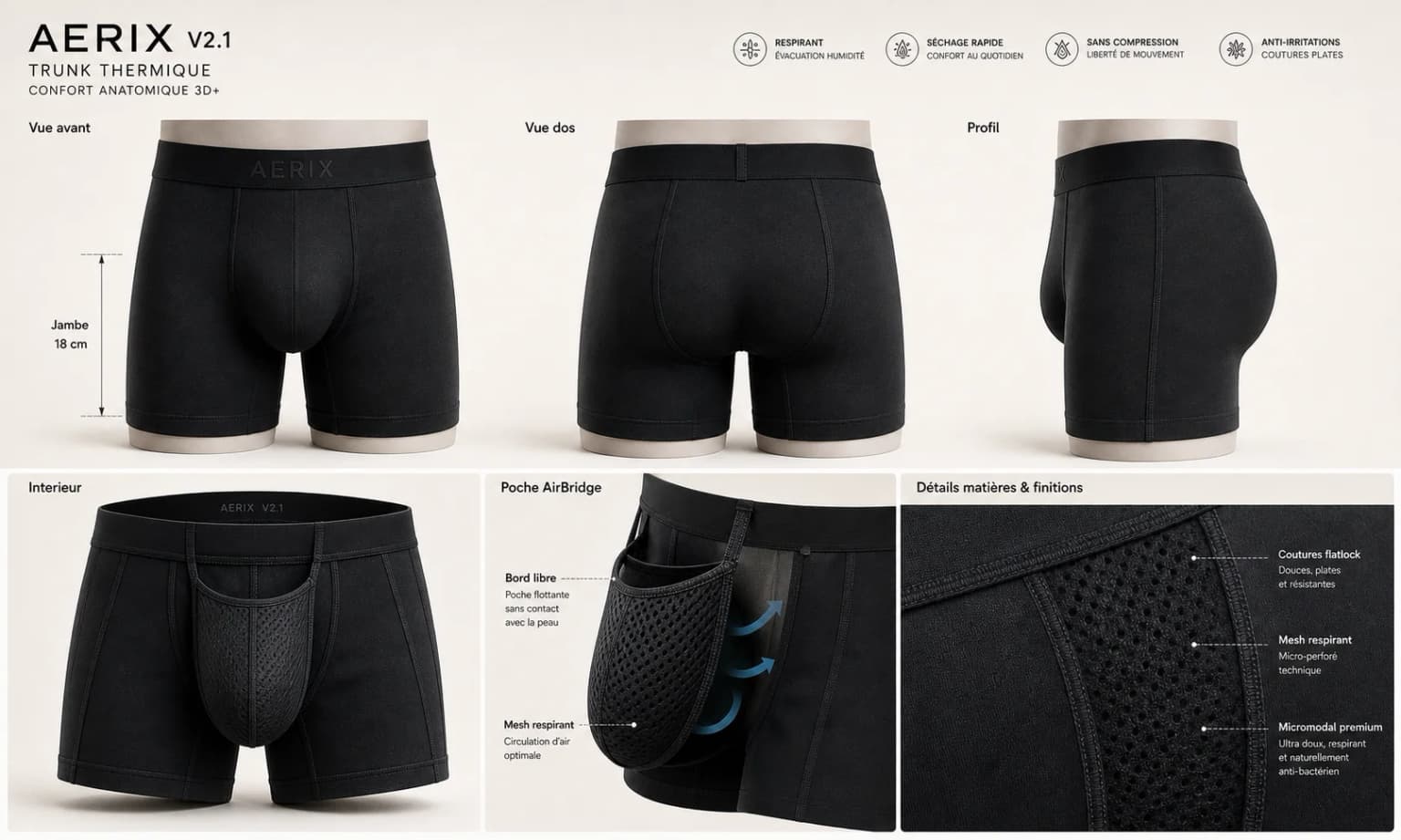
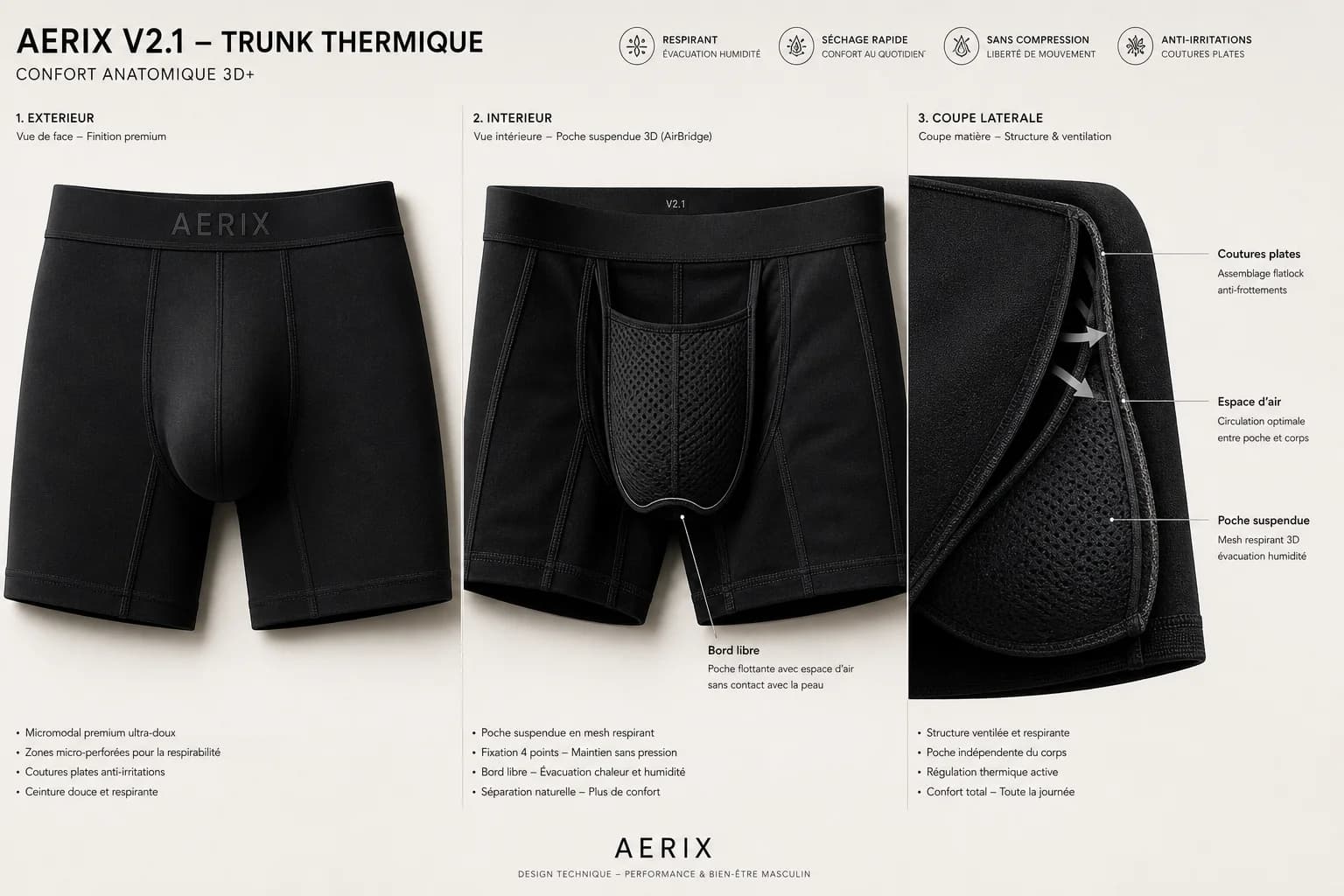
- Micromodal shell (92/8 blend): Handles moisture and stays soft all day, naturally odor-resistant
- AirBridge mesh sling: A suspended internal mesh pouch that creates a genuine air gap — no thigh contact, passive airflow throughout the day
- HeatBreak diamond gusset: Additional mesh at the base for extra airflow and moisture transfer right where heat concentrates
- Anti-roll flatknit waistband: Stays in place all day, no restriction, no mark
The result is underwear that works with your body's thermoregulation rather than against it — keeping you noticeably cooler and drier from morning to end of day.
For a deeper look at breathability specifically, see our breathable men's underwear guide. For chafing prevention, see our anti-chafe underwear guide.
---
Conclusion
Summer underwear isn't a luxury upgrade — it's a functional necessity if you want to stay comfortable when temperatures climb. The criteria are clear: micromodal fabric over cotton or synthetic, suspended pouch construction for airflow, adequate leg length to prevent chafing, an anti-roll waistband, and flat seams throughout.
AERIX is pre-launch and taking waitlist signups now. Join the waitlist to be among the first to receive it and access founding member pricing.
No payment now. Just a priority alert, product behind-the-scenes and first availability.