Best Men's Underwear 2026: An Honest Comparison
What is the best fabric for your underwear? Which type of cut should you prioritize? Discover our uncompromising comparison of market fabrics and architectures.
Finding the Best Underwear: Looking Beyond the Marketing
Every men's underwear brand claims to sell "the most comfortable boxer briefs in the world." Faced with this uniform promise, how do you find your way? Between cheap cotton packs from the supermarket and high-tech sports briefs, the choice is overwhelming, but objective criteria are rarely explained.
To find the best men's underwear in 2026, we must look past advertising slogans and scientifically analyze two fundamental factors: the textile fabric and the architecture of the cut.
Here is our honest and comprehensive comparison of the different market categories.
---
1. Traditional Cotton: The Historical Standard
Cotton is the most common fiber for men's underwear.
The Pros:
Cotton is a natural fiber, hypoallergenic, soft to the touch when new, and relatively inexpensive to produce. It's a reassuring default choice.
The Cons:
Cotton has one major physical flaw: it is hydrophilic but doesn't dry. It absorbs up to 8% of its weight in water, but holds this moisture at the core of its fiber. As soon as you move, walk, or face a sudden burst of stress, cotton traps your sweat. The boxer briefs become damp, heavy, stretched out, and start to chafe. By the end of the day, cotton loses all its softness and becomes rough due to the sweat salt.
Verdict: Ideal for a highly sedentary lifestyle in cool weather, but to be avoided at all costs for active or warm days.
---
2. Synthetic Fabrics (Polyester / Polyamide): The Athletic Option
Polyester and polyamide (nylon) are the kings of athletic wear.
The Pros:
These fibers are extremely durable, lightweight, highly elastic, and dry incredibly fast. They don't absorb water but let it slide to the outside.
The Cons:
Synthetics have a annoying tendency to trap bacterial odors. After a few hours of use, synthetic boxer briefs can begin to smell bad. Furthermore, polyester is not naturally thermoregulating: it tends to overheat the intimate zone, which is detrimental to spermatogenesis and general comfort at rest. Finally, the contact can sometimes feel rough on the most sensitive skin.
Verdict: Perfect for a one-hour run or workout session, but uncomfortable and unhygienic to be worn all day at the office.
---
3. Bamboo Viscose: The Eco-Friendly Illusion
Bamboo is often presented as the ecological and ultra-soft alternative to cotton.
The Pros:
The fabric is indeed very fluid, soft to the touch, and offers a pleasant feeling of freshness when first put on.
The Cons:
The "ecology" of bamboo is a marketing myth. To transform a rigid bamboo stalk into a fluid fabric, a heavy chemical process (often based on carbon disulfide) is required to turn the plant into viscose. In terms of performance, bamboo absorbs moisture but, just like cotton, struggles to get rid of it. Moreover, bamboo has a tendency to stretch out significantly over washes, causing the underwear to lose its initial support. The fabric ends up bagging at the thighs and riding up.
Verdict: Comfortable for lounging on Sunday at home, but unreliable for durable support throughout the day.
---
4. Micromodal and Premium Modal: The Science of Comfort
Modal and its even finer version, Micromodal, are cellulosic fibers made from European beechwood (typically produced by the Austrian manufacturer Lenzing).
The Pros:
This is the absolute pinnacle of textile technology for daily wear. Micromodal is three times softer than cotton. It is naturally silky, highly breathable, and has an absorption capacity 50% higher than cotton, while wicking this moisture outward for ultra-fast drying. It doesn't retain odors, remains stable in the wash, and keeps its softness wash after wash without ever stiffening.
The Cons:
The production cost of quality Micromodal is significantly higher than that of cotton or polyester. Boxer briefs made from this fiber are therefore generally positioned in higher price segments.
Verdict: The absolute best compromise for daily comfort, office work, and travel.
---
5. Architecture: 3D Pouch vs Traditional Flat Cut
The fabric isn't everything. The cut of the boxer brief determines its ability to support the male anatomy without crushing it.
Traditional Flat Cut:
The majority of industrial boxers are designed in "2D". The front panels are flat, compressing the anatomy against the body. This compression increases "skin-on-skin" contact, generating heat and painful chafing at the crotch.
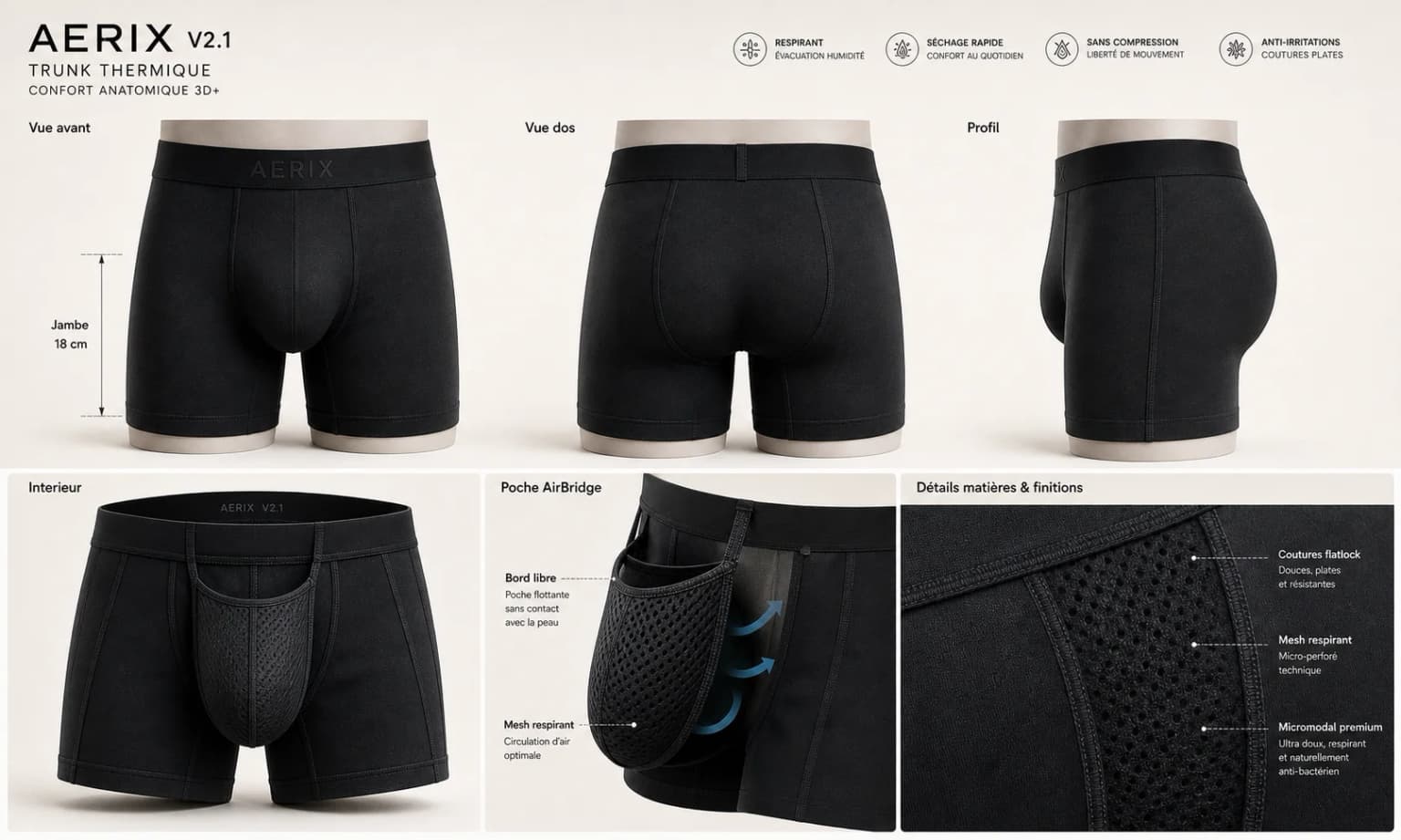
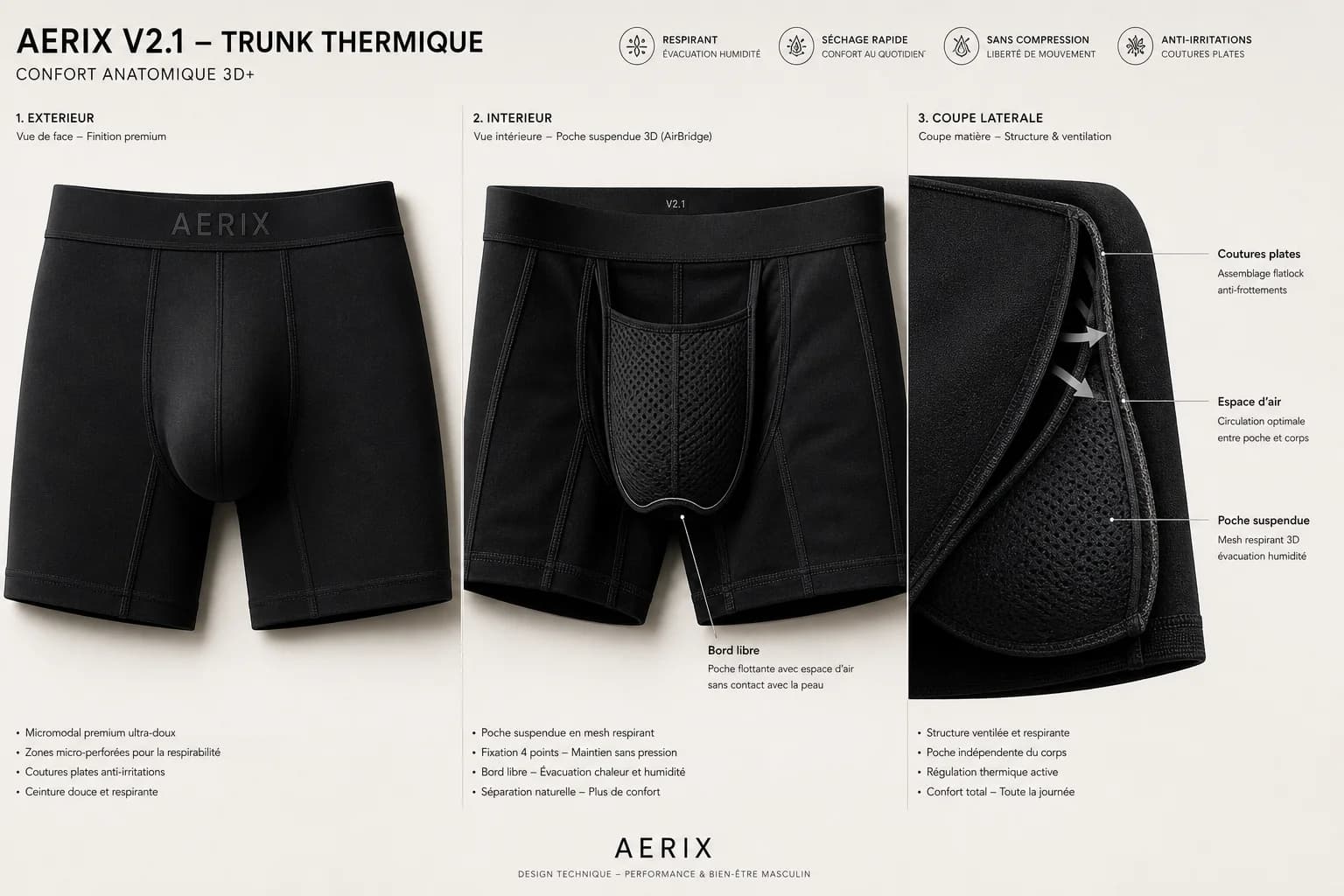
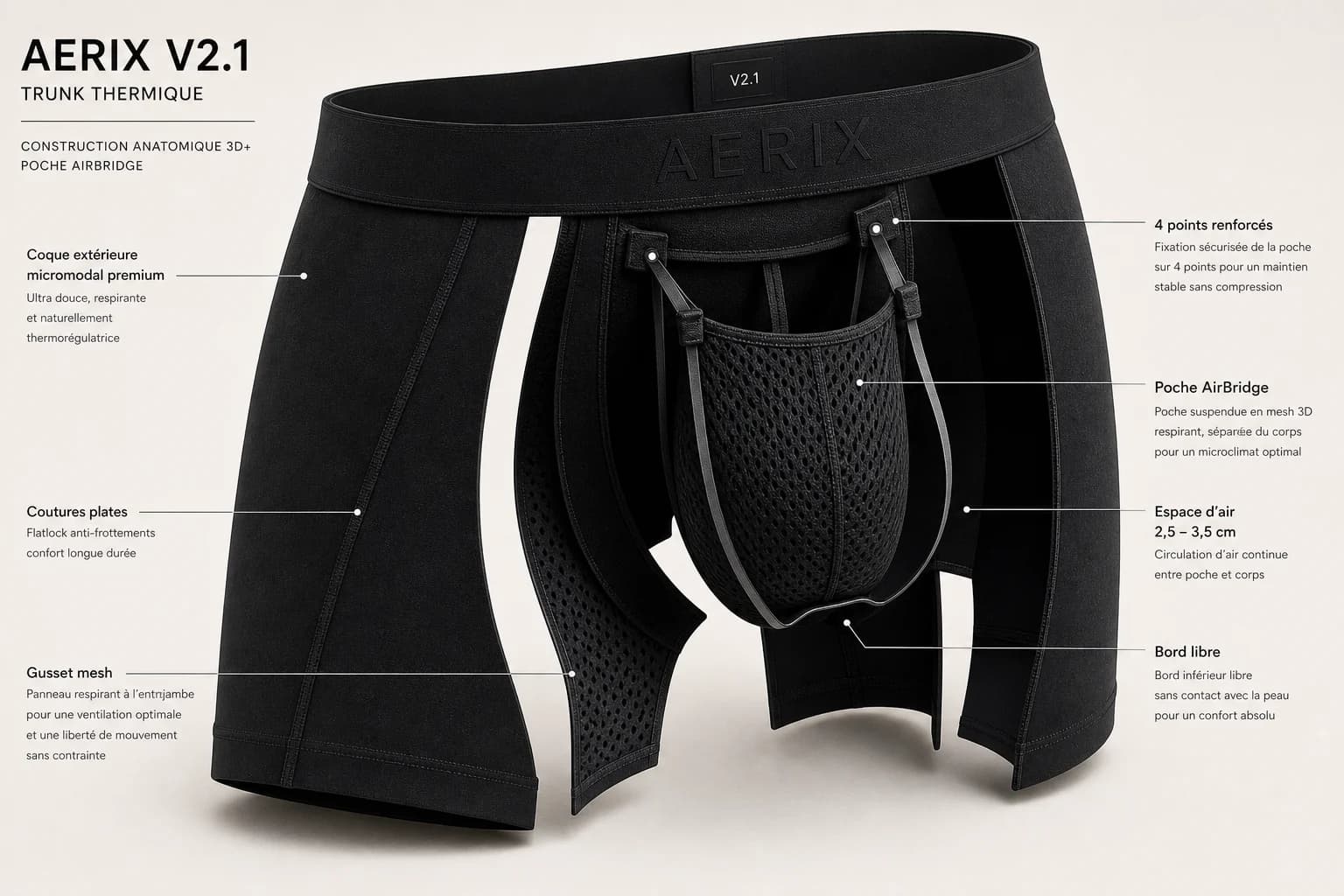
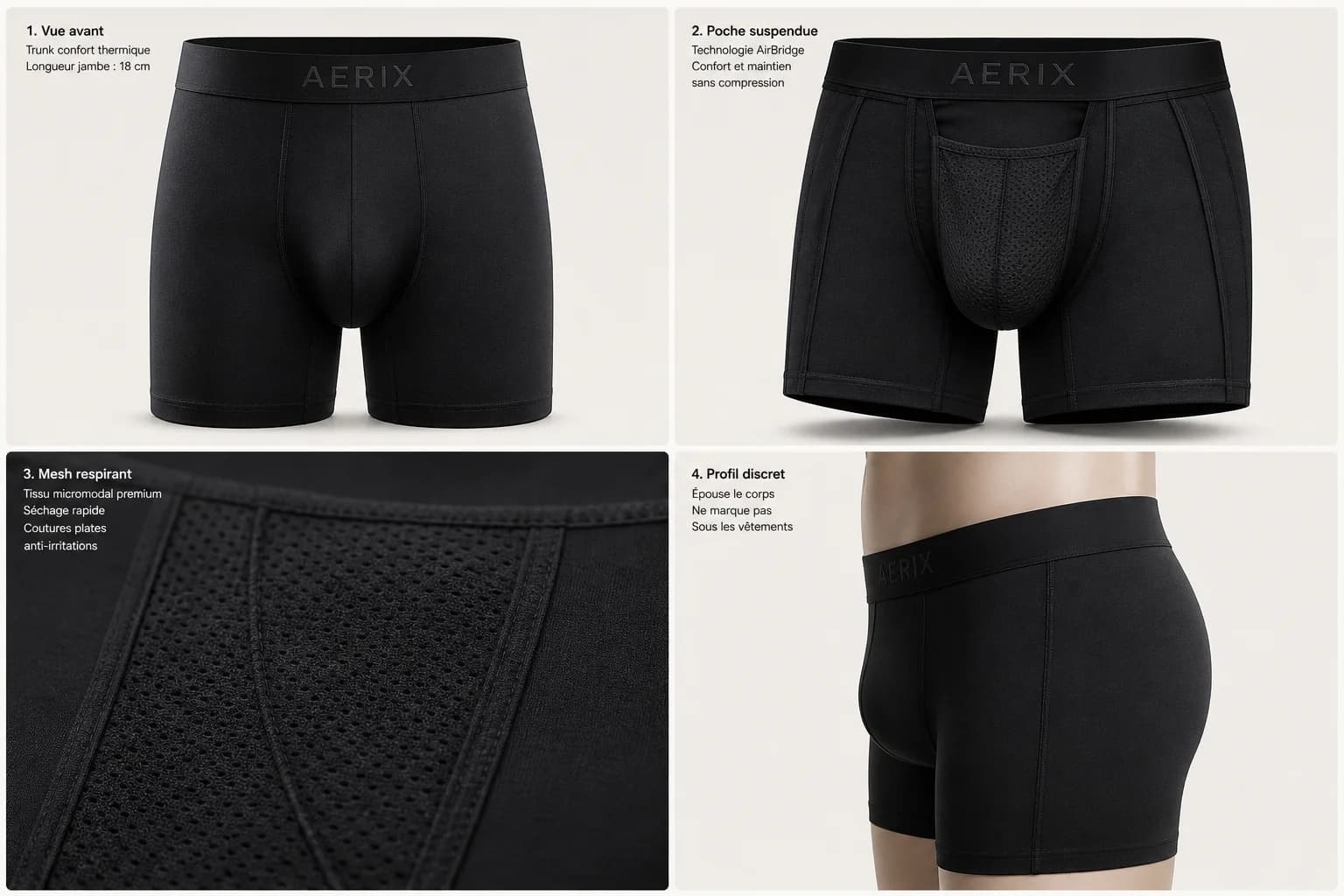
Cut with 3D Anatomical Pouch (AERIX AirBridge Type):
This design incorporates a three-dimensional molded pouch that naturally cradles the male anatomy. It separates it from the thighs, eliminating direct friction. This allows constant air circulation around the intimate area, reducing the perceived temperature by nearly 2 degrees.
---
Performance Summary Table
| Material / Type | Softness | Moisture Wicking | Thermoregulation | Shape Retention | Anatomical Support | |---|---|---|---|---|---| | Classic Cotton | Medium | Very Low | Low | Medium | Low (flat cut) | | Synthetic Sport | Low | Excellent | Low | High | Medium | | Bamboo (Viscose) | High | Medium | Medium | Low | Medium | | Premium Micromodal | Exceptional | Excellent | Excellent | High | Excellent (with 3D pouch) |
---
Conclusion: Which Boxer Brief to Choose in 2026?
If you are looking for underwear that makes you forget you're wearing it, prevents chafing, and regulates temperature throughout the day, the ideal choice is a premium Micromodal model equipped with an anatomical 3D pouch and flatlock seams.
This is precisely the set of specifications we followed to design the AERIX boxer brief. By combining ultra-fine Lenzing Micromodal with our AirBridge support architecture, we created technical underwear dedicated to the daily comfort of the active man.
No payment now. Just a priority alert, product behind-the-scenes and first availability.