Modal vs Cotton Underwear: Which Is Actually Softer?
Modal and cotton are both natural fibers — but one is dramatically softer, more breathable, and better at managing heat. Here's the science behind the difference.
Modal vs Cotton: A Fiber-by-Fiber Breakdown
If you've ever held a modal garment and a cotton garment side by side, you already know something feels different. But the difference goes far beyond touch. When it comes to men's underwear — where you're wearing the same fabric against your most sensitive skin for 12+ hours a day — the gap between modal and cotton matters enormously.
This article breaks down the real, science-backed differences between the two fibers: where they come from, how they're made, how they perform on your body, and why it matters specifically for underwear.
---
Where Does Each Fiber Come From?
Cotton is one of the oldest textile fibers in the world. It comes from the seed pods of the cotton plant (*Gossypium hirsutum*), which grows primarily in warm, dry climates. The fibers are harvested, cleaned, and spun into yarn. Cotton is naturally cellulosic — meaning it's made of plant cellulose — and has been used in clothing for over 7,000 years.
Modal is also a cellulosic fiber, but it's manufactured rather than directly harvested. Modal is produced from beechwood pulp, typically sourced from sustainably managed beech forests in Austria and Central Europe. The wood pulp is dissolved in a chemical solution, extruded through fine nozzles (spinnerets), and regenerated into fibers. This manufacturing process allows for extraordinary precision in fiber diameter — and that precision is what makes modal so much softer than cotton.
---
Softness: Why Modal Wins by a Wide Margin
The softness of a textile fiber comes down primarily to two things: fiber diameter (measured in microns) and surface texture.
Cotton fibers typically range from 16 to 21 microns in diameter, and they have a slightly irregular, ribbon-like cross-section under a microscope. That irregularity creates micro-friction against the skin — barely perceptible individually, but significant across thousands of fibers over a long day.
Modal fibers, by contrast, are manufactured to a diameter of around 10 to 14 microns — significantly thinner. Thinner fibers create a denser, smoother surface that glides rather than drags against the skin. Modal is widely cited as being approximately 50% softer than cotton by hand-feel testing.
Micromodal — the next generation of the fiber used in AERIX — takes this further, with fiber diameters below 10 microns. The result is a fabric that many users describe as feeling like a "second skin": there but not there.
---
Moisture Management: The Most Important Difference for Underwear
Cotton is highly absorbent. That's often cited as a virtue — and for towels, it absolutely is. But for underwear, absorbency without quick release creates a serious problem.
When you sweat — even mildly, from normal body heat and everyday activity — cotton absorbs the moisture and holds it. A damp cotton waistband doesn't just feel uncomfortable: it creates a warm, humid microclimate against your skin, which promotes chafing, odor, and general heat buildup. This is the phenomenon behind that heavy, clammy feeling cotton underwear develops by early afternoon.
Modal performs fundamentally differently. Modal fibers have a 50% higher moisture-wicking capacity than cotton and release that moisture significantly faster. Rather than holding moisture against the skin, modal moves it away from the surface and allows it to evaporate. The technical term is moisture transfer coefficient — and modal's is dramatically higher.
In practical terms: cotton underwear gets wetter as your day progresses. Modal underwear manages that moisture dynamically, staying closer to dry throughout.
---
Breathability and Temperature Regulation
Both cotton and modal are breathable relative to synthetic fibers (polyester, nylon), but they differ in *how* they breathe.
Cotton breathes passively: air can move through the weave, but the fiber itself doesn't actively assist in managing heat. When moisture accumulates in cotton, it actually reduces breathability by blocking the weave's air channels.
Modal breathes more actively. The smooth, fine fiber structure allows air to move through more freely, and because modal doesn't retain moisture, the weave stays open. This means modal maintains its breathability even during moderate physical activity — whereas cotton progressively loses breathability as it becomes damp.
For men's underwear specifically, this translates to a real difference in thermal comfort. The intimate area runs 2–4°C warmer than general body temperature by default (a phenomenon called scrotal thermoregulation). Fabric that adds heat by trapping moisture compounds this problem. Fabric that manages moisture actively helps keep the area cooler.
---
Durability After Washing
Here's an area where cotton has traditionally had an edge — but the gap has narrowed significantly.
Standard cotton is robust and can withstand hundreds of wash cycles with minimal degradation, as long as it's not washed at very high temperatures. However, cotton does tend to shrink (up to 5–8% in the first few washes) and lose softness over time as the fibers break down.
Modal is more dimensionally stable than cotton — meaning it shrinks less after washing. High-quality modal (especially Lenzing TENCEL Modal) maintains its softness and shape through repeated washing cycles significantly better than cotton. It doesn't pill as readily, and it doesn't roughen with repeated wear.
The caveat: modal is more sensitive to high-heat tumble drying. Machine wash on a gentle or normal cycle at 30–40°C is ideal. Air drying or low-heat tumble drying preserves the fiber longer.
---
Environmental Footprint
This is a nuanced comparison that's often oversimplified.
Cotton's environmental impact is well-documented: it requires significant water (roughly 10,000 liters per kilogram of conventional cotton produced), relies heavily on pesticides, and contributes to soil degradation in major producing regions. Organic cotton reduces the pesticide load but doesn't fully address the water issue.
Modal's environmental profile is more complex. The beechwood forests used for Lenzing modal are PEFC-certified, meaning they're sustainably managed. Lenzing's manufacturing process also operates in a closed-loop system: over 95% of the chemicals used in processing are recovered and reused, significantly reducing chemical waste and water consumption. Lenzing Modal has a substantially lower water and land footprint than conventional cotton.
Neither fiber is perfectly sustainable, but modal — when produced by certified manufacturers like Lenzing — has a meaningfully lower environmental impact per garment.
---
What Is Micromodal — And Why Does It Matter for AERIX?
Micromodal is modal taken to its logical conclusion. Standard modal is already a refined fiber; micromodal applies even more precise spinning technology to produce fibers at sub-10 micron diameters — finer than the finest silk.
The result is a fabric that:
- Feels impossibly light and soft
- Wicks moisture even faster than standard modal
- Drapes and conforms to the body with almost no resistance
- Maintains its properties through dozens of wash cycles
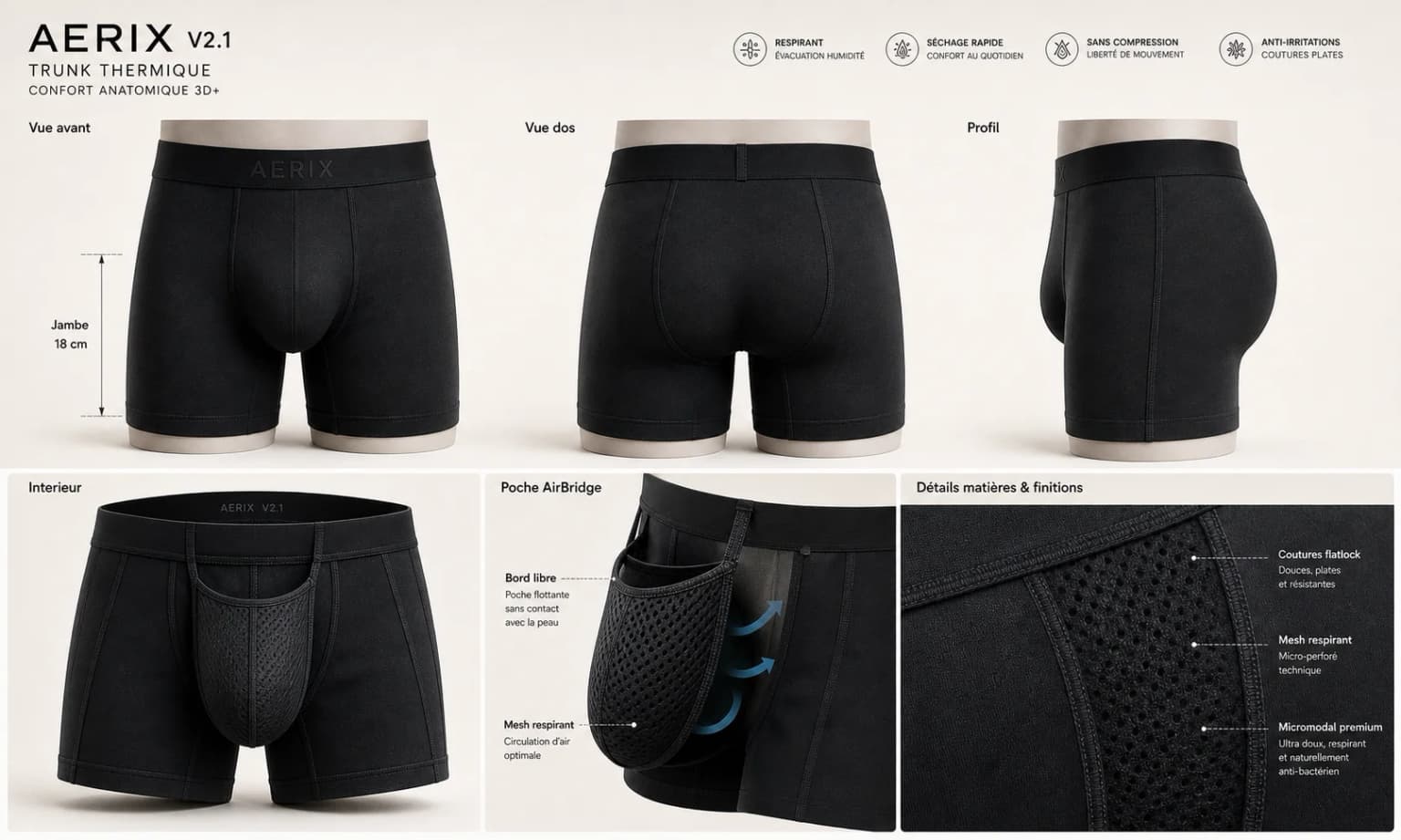
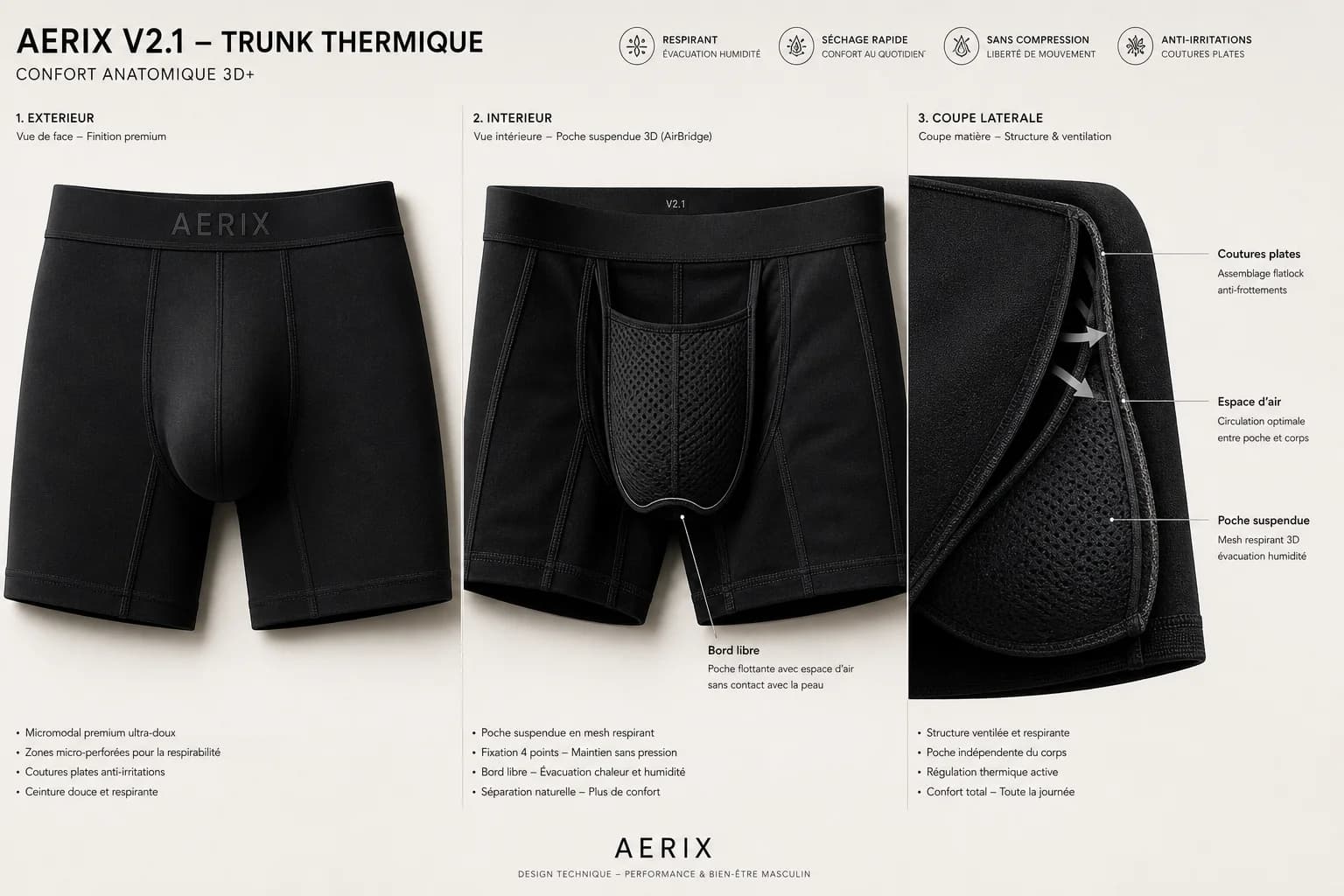
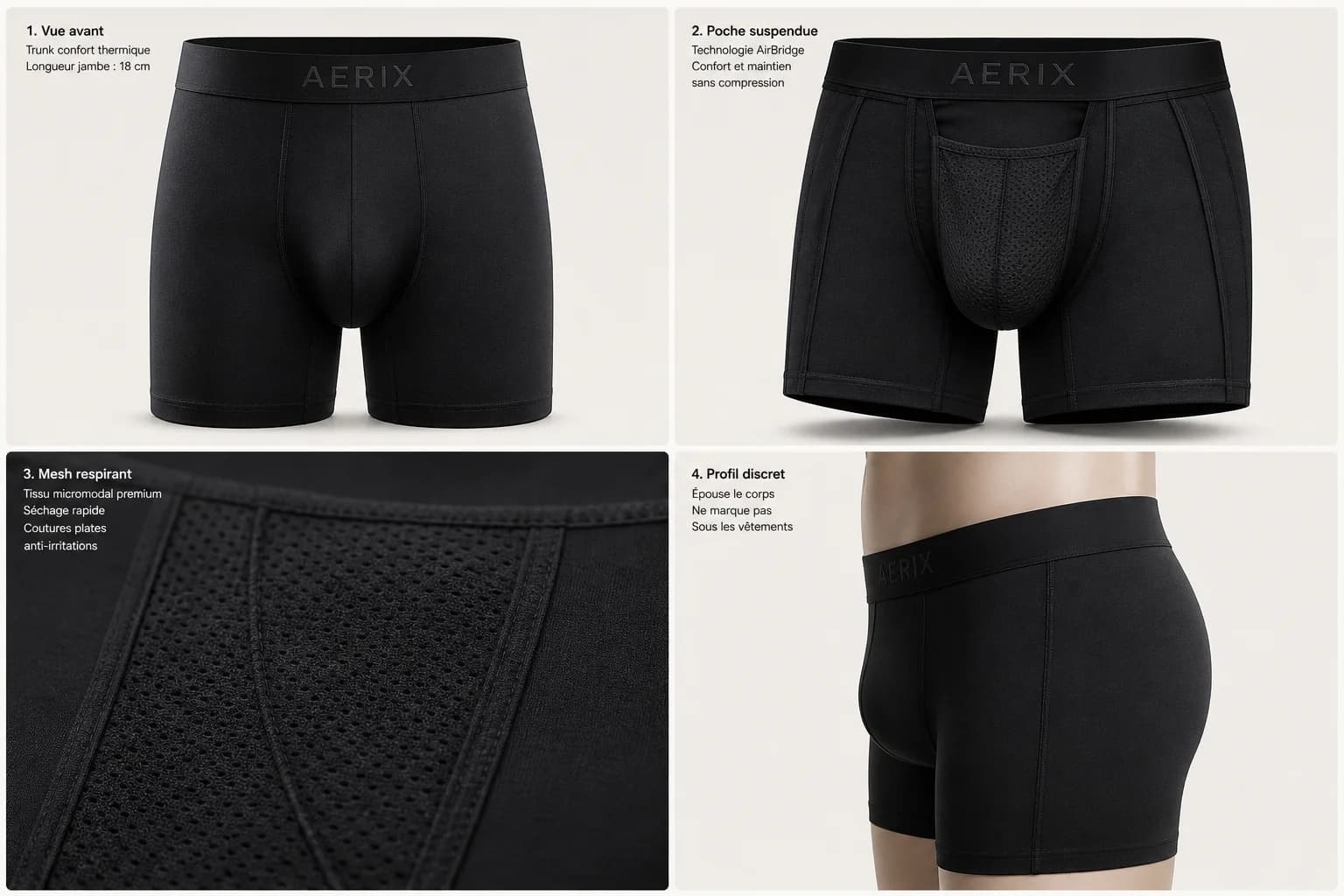
AERIX uses a 92/8 micromodal-elastane blend as its outer shell. The 92% micromodal provides all the softness, breathability, and moisture management described above. The 8% elastane ensures the fabric moves with the body without bunching, riding up, or requiring readjustment.
This blend is paired with an internal AirBridge mesh sling — a suspended mesh pouch that creates a literal air gap between the intimate area and the thigh — and a HeatBreak diamond gusset that further improves airflow and moisture transfer.
---
The Bottom Line
| Property | Cotton | Modal | Micromodal (AERIX) | |---|---|---|---| | Softness | Moderate | ~50% softer than cotton | ~60–70% softer than cotton | | Moisture management | Absorbs and holds | Wicks and releases | Wicks faster + air gap | | Breathability | Moderate, degrades when wet | High, consistent | High + structural airflow | | Durability | Good, shrinks slightly | Very good | Very good | | Environmental footprint | High (water, pesticides) | Lower (closed-loop) | Lower | | Heat management | Poor (adds heat when damp) | Good | Excellent |
If you're choosing between cotton and modal for men's underwear, modal wins in every category that actually matters for all-day comfort. Micromodal — what AERIX is built around — pushes that advantage further still.
---
Ready to Feel the Difference?
AERIX is currently in pre-launch. The first production run is limited, and we're building our founding community now. Join the waitlist to be first in line and receive early access pricing.
No payment now. Just a priority alert, product behind-the-scenes and first availability.