Testicular Heat: What Are the Impacts on Men's Health and Comfort?
Why is local temperature so critical for spermatogenesis? Learn the scientific impacts of heat on testicles and how your choice of underwear can make a difference.
Testicular Thermal Regulation: A Biological Necessity
Unlike most internal organs in the human body that function at a constant temperature of about 37°C (98.6°F), the testicles require a lower temperature, ideally between 33°C and 34.5°C (91.4°F and 94.1°F).
This difference of 2 to 4 degrees Celsius is not a minor anatomical detail. It is an indispensable condition for spermatogenesis (the process of sperm production) and testosterone synthesis. This is the very reason why the testicles are located outside the abdominal cavity, within the scrotum, which acts as a natural thermostat.
1. How Does the Scrotum Regulate Temperature?
The male body has sophisticated reflex mechanisms to keep the testicles cool:
- The cremaster muscle: When the outside temperature drops, this muscle contracts to bring the testicles closer to the body for warmth. Conversely, in warm temperatures, it relaxes to move them away from the body and promote heat dissipation.
- Scrotal sweat: The scrotum has a very high density of sweat glands, which cool the area through sweat evaporation.
- The heat exchanger (pampiniform plexus): A network of veins surrounds the testicular arteries to pre-cool the warm arterial blood coming from the body before it reaches the testicles.
2. What Are the Impacts of Excessive Heat (Scrotal Hyperthermia)?
When scrotal temperature increases and remains close to 37°C for a prolonged period, thermal regulation mechanisms wear out. This leads to several documented impacts:
Alteration of Spermatogenesis
Germ cells (which produce sperm) are extremely heat-sensitive. Excessive heat exposure disrupts cell division and can lead to a significant decline in sperm count, motility, and normal morphology.
Oxidative Stress
Heat promotes the production of free radicals at the cellular level, which damages sperm DNA (sperm DNA fragmentation).
Discomfort and Moisture
On a daily comfort level, temperature elevation leads to increased sweating. If this moisture is not wicked away, it creates an environment prone to bacteria, odor, and friction chafing.
3. Daily Factors That Overheat the Intimate Area
Several modern habits contribute to keeping the testicles at a temperature that is too high:
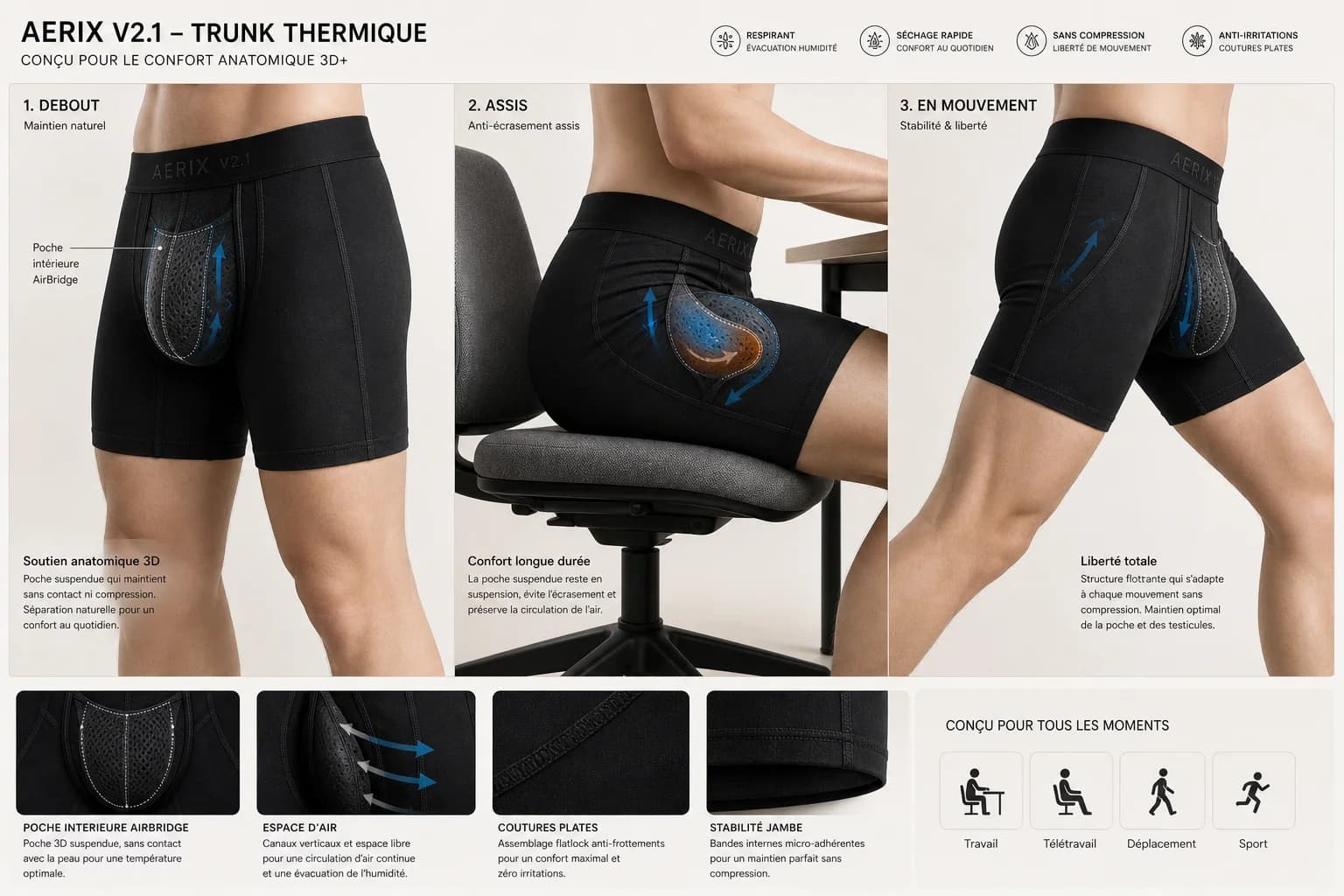
- Prolonged Sitting: Sitting at a desk or driving compresses the scrotum against the body and thighs, increasing local temperature by 2°C in less than two hours.
- Tight Underwear: Slips or briefs that are too tight hold the testicles close to body heat and block air circulation.
- Synthetic Fabrics or Thick Cotton: Cotton traps moisture, and low-end synthetic fabrics trap heat, creating a localized greenhouse effect.
4. How to Reduce Heat on a Daily Basis?
To preserve men's thermal comfort and reproductive health, simple habits can help:
- Take Active Breaks: Stand up every hour to walk for a few minutes and allow air to circulate.
- Choose Natural, Breathable Fabrics: Micromodal, for example, wicks moisture away much faster than cotton and feels cool to the touch.
- Select the Right Underwear: Choose underwear that creates a natural anatomical space rather than compressing the area.
The AERIX Approach to Thermal Comfort
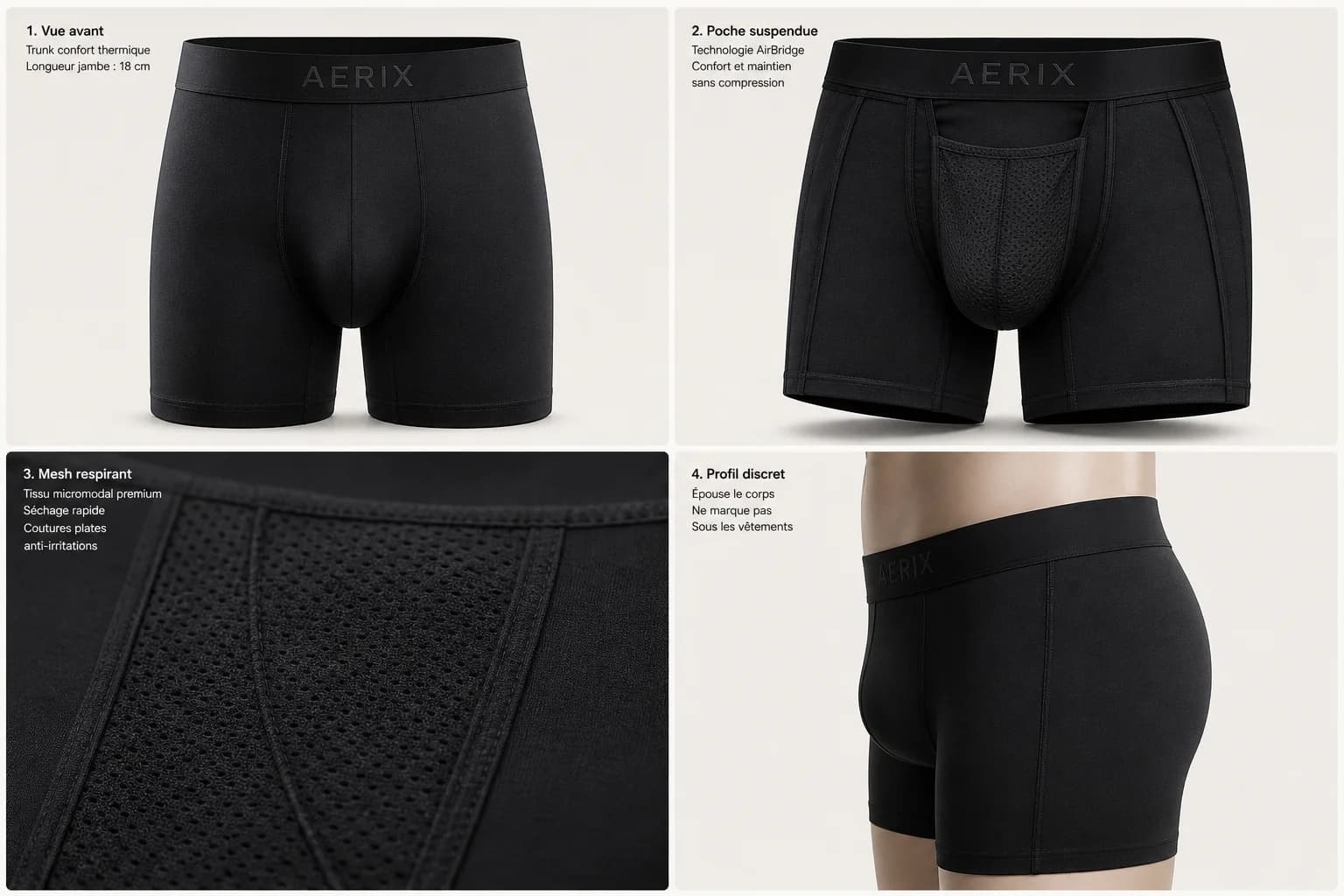
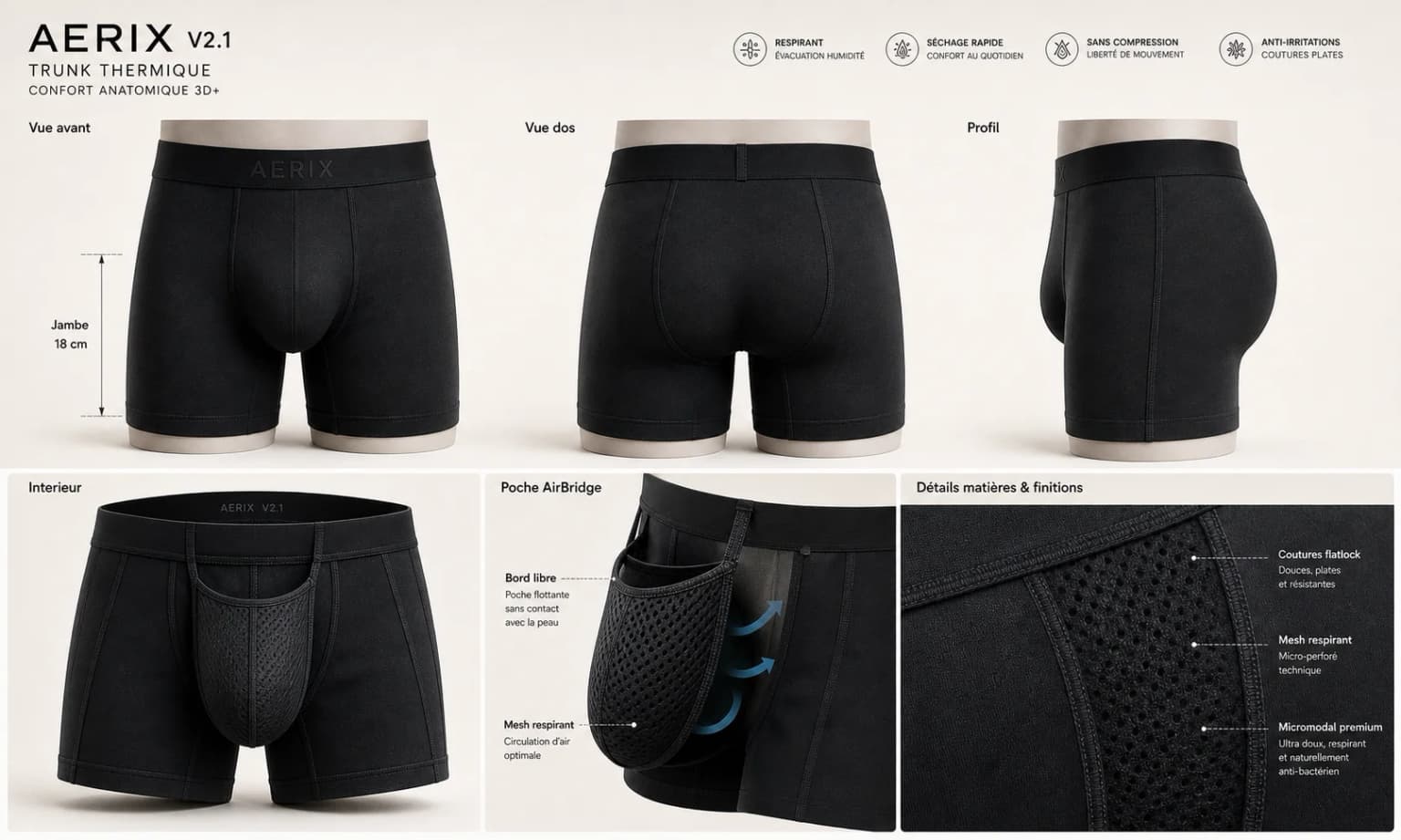
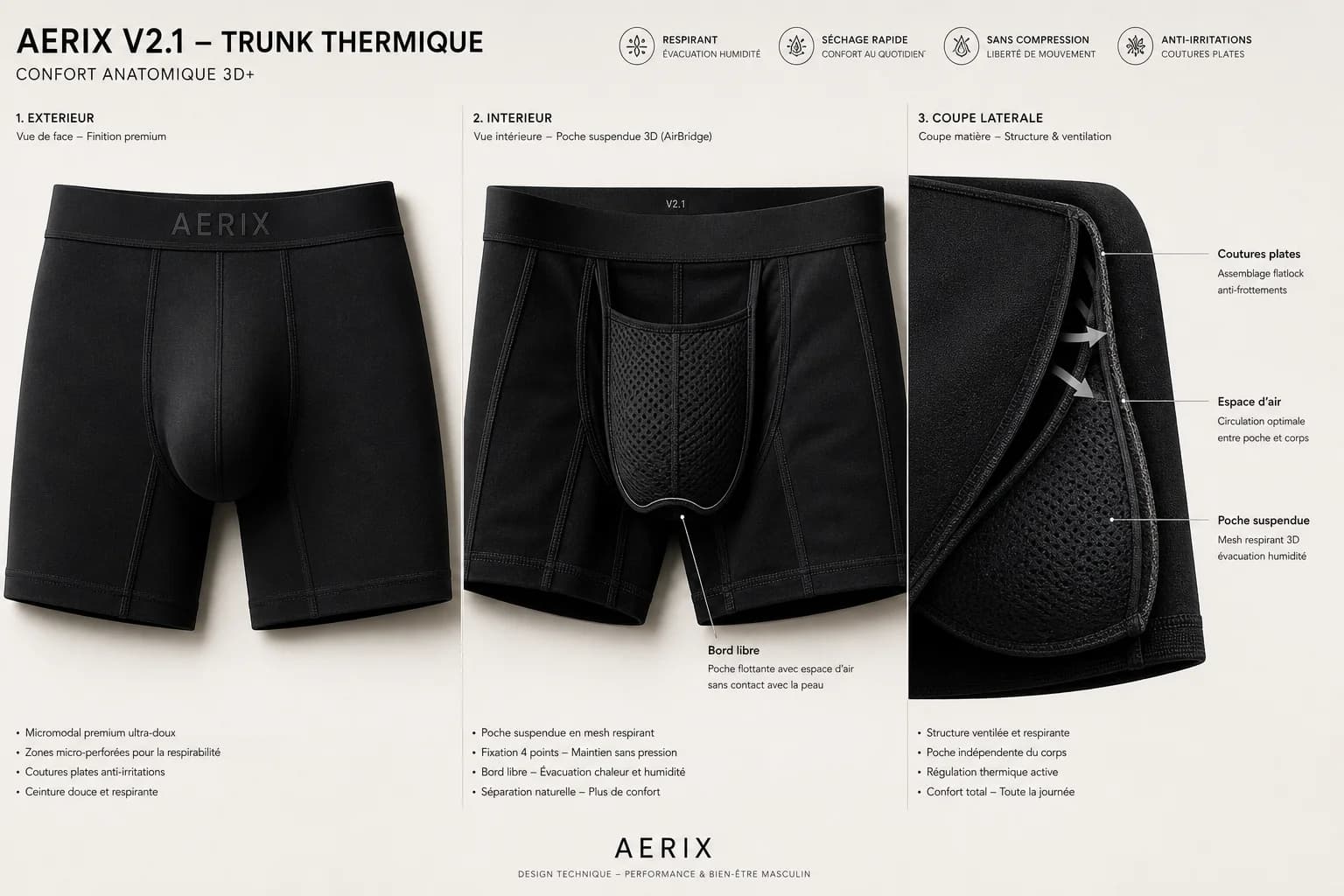
AERIX underwear was designed around these scientific findings. By eliminating compression with the AirBridge construction (which gently separates the intimate area from direct contact with the thighs) and utilizing highly breathable mesh and European micromodal, it promotes optimal passive thermal regulation throughout the day.
No payment now. Just a priority alert, product behind-the-scenes and first availability.